Materials
Polyester vs Polyether Reticulated Foam: Which Should You Specify?
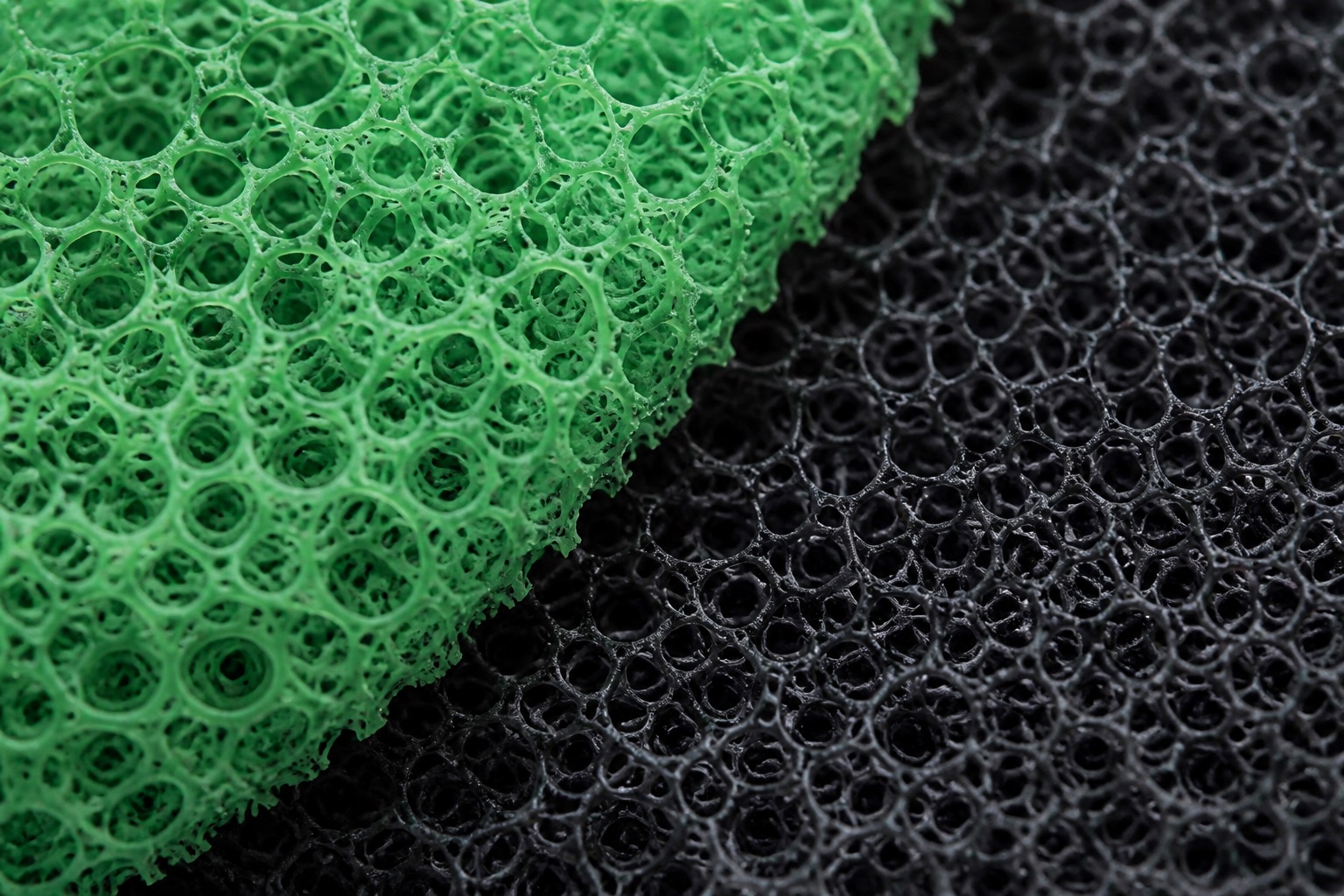
Both polyester and polyether reticulated foams start as polyurethane, but they behave differently in service. Choosing the wrong family is a common reason filters collapse early, absorb moisture or lose dimensional stability. Here is a practical way to decide.

When polyester reticulated foam wins
Polyester grades are typically chosen for higher mechanical strength, abrasion resistance and better performance against oils and many industrial chemicals. They are a strong default for HVAC panel filters, paint booth intake stages and industrial machinery filtration.
- Higher tensile strength and dimensional stability
- Better oil and chemical resistance in many duties
- Ideal for dry air filtration and long service intervals
When polyether reticulated foam wins
Polyether grades resist hydrolysis and stay resilient in humidity, splash zones and continuous water contact. That makes them the preferred choice for aquarium and pond filtration, aquaculture media and quick-dry outdoor or swimming-pool furniture cushions.
A simple selection rule
If the application is mostly dry air with mechanical stress — start with polyester. If moisture, humidity or water contact dominates — start with polyether. MeshFLO can sample both families and convert either into die-cut components to your drawing.
Frequently asked questions
Can I use polyester foam in an aquarium?
Polyether is usually the safer long-term choice for continuous water contact because of better hydrolysis resistance. Ask us if your duty is intermittent wetting only.